Through the Archives: Flax and Hemp in Rural Luxembourgish Moselle
Through the Archives: Flax and Hemp in Rural Luxembourgish Moselle
In the rural Luxembourgish part of the Moselle region, everyday life in the 18th and 19th centuries was strongly shaped by self-sufficiency. The inhabitants produced their food as well as most everyday items themselves, combining inherited knowledge with proven craftsmanship and tools that are largely forgotten today.
.
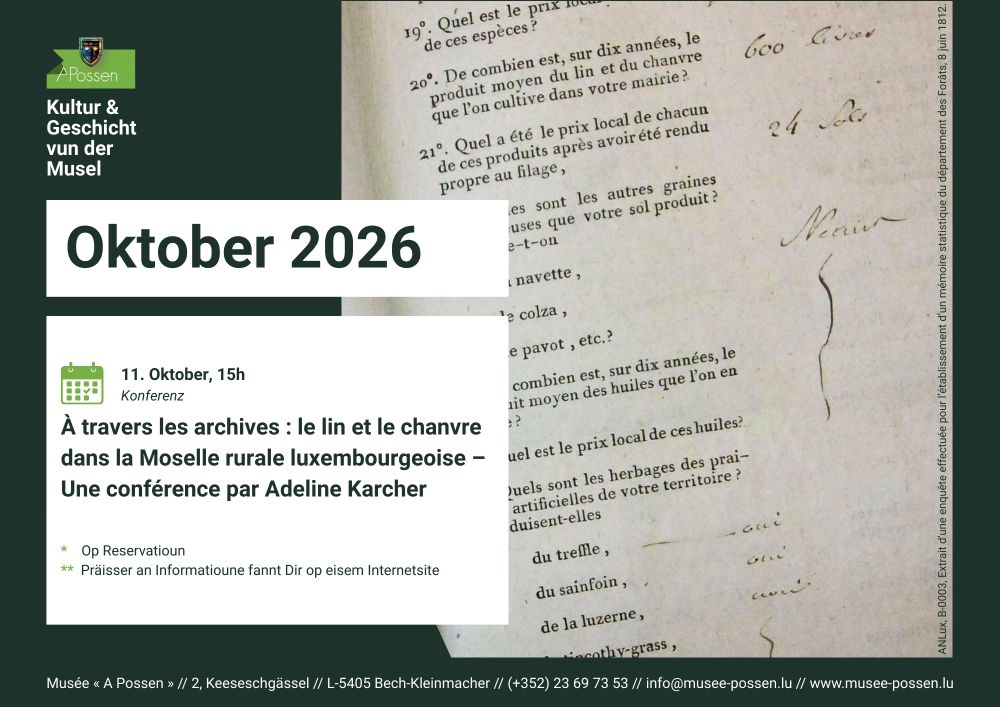
Based on historical documents from various archival collections of the Moselle region, Adeline Karcher will shed light, on October 11 at 3 p.m., on the role and importance of two key crops – flax and hemp – in the rural economy of the Luxembourg Moselle area. She will place them within the context of the daily work and living routines of the population at that time.
In addition to their use as animal feed or for oil production, flax and hemp were also cultivated in order to process their fibers and produce yarn and later fabric. Over time, however, these crops gradually disappeared from rural areas.
.
The conference also offers the opportunity to (re)discover old documents as valuable witnesses of everyday life in the past and to immerse oneself in historical manuscripts.
The conference will be followed by a discussion with the audience.
Sunday, October 15
3 p.m.
In French
Open to all (children must be accompanied by an adult)
Reservation required by phone at +352 23 69 73 53 or by email at info@musee-possen.lu (limited seating available)
Price: free